
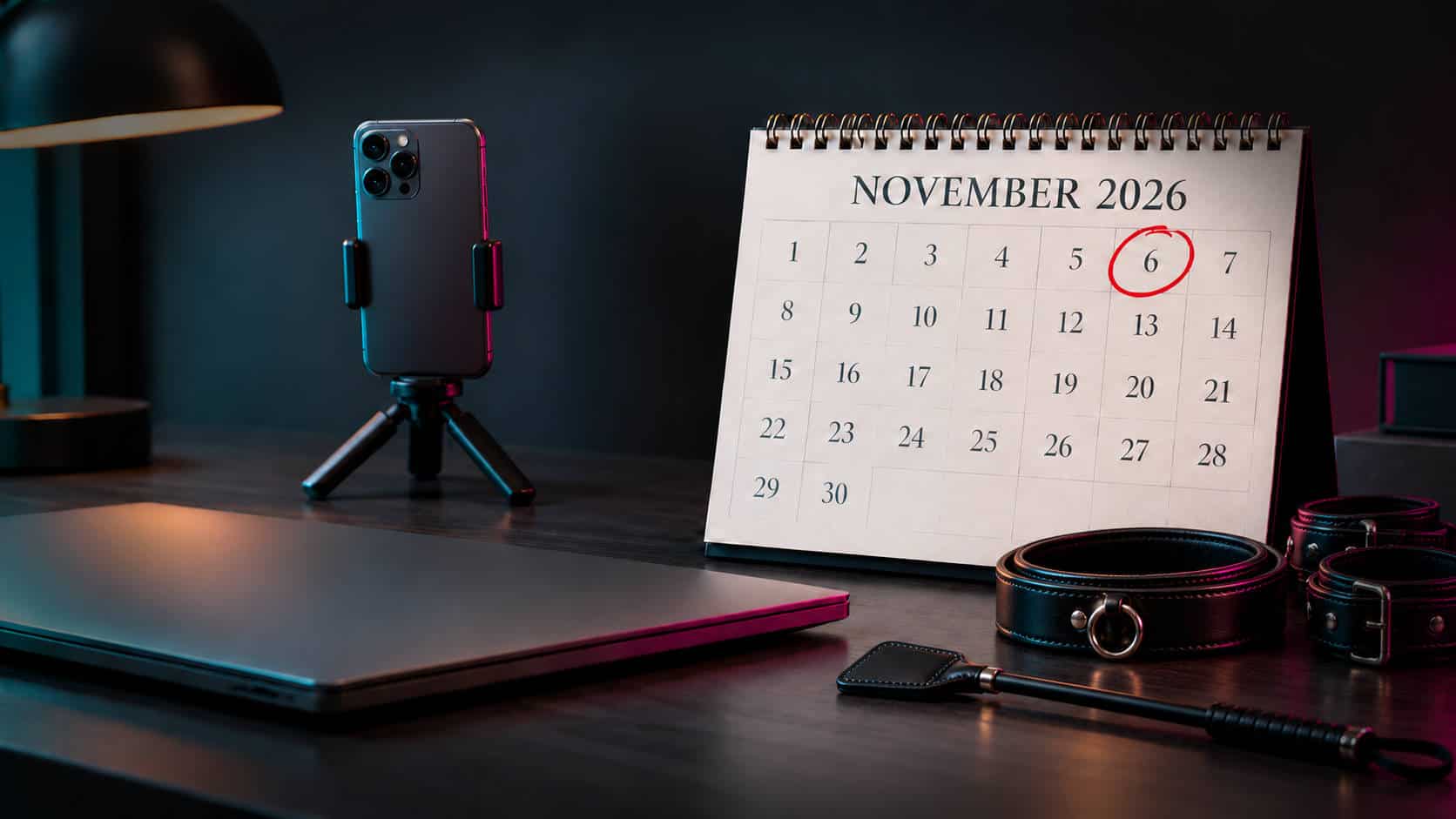
From 6 November 2026, three types of adult content become illegal in the UK. If any of your content involves choking, family roleplay, or an adult playing a character under 16, you need to deal with it before that date — and that includes old content sitting in your archives.
And if you're not in the UK, don't skip this. OnlyFans is run by a UK company. That one fact means this law reaches a lot further than the UK, and we'll explain exactly how further down.
Before anything else, one thing this law does not change. Every performer must be 18 or over, and always has been. Content involving a real under-18 is child sexual abuse material — a completely separate and far more serious crime, and nothing here changes that by a word. The new rule we explain below is about the character being played, not the person playing them. An adult pretending on camera to be under 16 is the new offence.
The deadline, and why this one is different
Most new laws say "don't do this from now on." This one is unusual, and the difference matters a lot.
Simply still having the files counts as the crime. Not making it. Not selling it. Having it.
So the date isn't a line you stop crossing — it's a deadline by which the content has to be gone. The government has said plainly that anyone who already has this kind of material must delete it before 6 November. Same for anything you've published: it has to come down and stop being available before that date.
There's no amnesty and no grace period. On 6 November, whatever is still on your drives is the problem.
Why this law exists, and where we stand
These offences are aimed at reducing sexual violence — in particular the normalising of strangulation, which campaigners and medical bodies have linked to real-world harm. That is a goal worth supporting, and we support it.
It is also true that the law is drawn widely enough to catch consensual, carefully made content produced by professional creators who have done nothing wrong. Both of those things are true at the same time, and saying the second doesn't undercut the first.
So this isn't an argument for or against the new rules. It's a practical guide to what changes, who it affects and what to do about it — written for creators who have to deal with it either way.
What's actually banned
Three separate things. Here they are in plain English.
1. Choking and suffocation
Any pornographic video or image that realistically shows strangulation or suffocation.
This is the one most likely to affect creators who have always worked carefully, safely and with full consent. It covers:
- Hands round the throat, applying pressure
- A belt, rope, bag or anything else that blocks breathing
- Consensual BDSM scenes — even when everyone agreed, everyone was safe, and nobody was hurt
That last point is the important one, and it is the hardest part of this law for professional creators. The offence is about what the video shows, not what happened on set. A carefully planned, fully consensual breath-play scene between experienced performers still shows realistic strangulation, and this law doesn't distinguish between that and anything else.
If you have been making this content consensually, with negotiation, safewords and aftercare, that care was real and it mattered. It just isn't the thing this particular law measures. That's a genuine loss for people who did everything right.
What it doesn't seem to cover: a hand resting on a throat without choking, or talking about choking when the video doesn't show it.
2. Sex between relatives
Any pornographic video or image realistically showing penetrative sex where a viewer would think the two people are related — or are pretending to be related.
This splits into two groups, and the difference between them matters enormously for your business.
Group one: blood relatives. Parent and child, grandparent and grandchild, brother and sister, half-siblings, uncle and niece, aunt and nephew.
If a scene shows these people as being in one of those relationships — or pretending to be — it's covered. The ages shown don't change anything here. Two 30-year-old performers playing brother and sister are still covered.
Group two: step and foster relationships. Step-parent and step-child, stepbrother and stepsister, foster parent and foster child.
This group is only covered if at least one person is shown as being under 18.
So, to answer the obvious question directly: yes — if everyone in a step-family scene is clearly presented as an adult, that scene isn't caught by this offence. The hugely popular "stepsis" genre, played by two obvious adults, appears to fall outside it.
| The scene | Is it covered? |
|---|---|
| Two adults playing stepbrother and stepsister, both clearly adults | No — this offence doesn't apply |
| Two adults playing brother and sister (not step) | Yes — pretending to be blood relatives is covered, whatever ages are shown |
| Two adults playing stepdad and stepdaughter, daughter shown as 16 | Yes — someone is shown as under 18 |
| Real blood relatives | Yes |
One word in a title isn't the test. "Daddy" is usually just a term of address and doesn't by itself mean you're showing a father and daughter. But "stepsis" combined with a storyline and marketing that suggests someone is young is a different matter. What counts is the overall picture: the footage, the dialogue, the title, the description and the tags together.
3. Characters played as under 16
Any pornographic video or image showing sexual activity where someone is played as being under 16.
Remember the point at the top: your performers are adults, must be adults, and that hasn't changed. What's new is that an adult performer playing a character under 16 is now a crime — even though that performer is 25 and has the ID to prove it.
The change is about the character, not the cast.
Things that are not enough on their own to break this rule:
- A performer who simply looks young
- A school uniform, with nothing else suggesting the character is under 16
- The word "teen" — it covers ages 13 to 19, so on its own it doesn't mean under 16
- "Barely legal" — this normally means 18 or over
What does break it is everything around the scene making it clear the character is under 16: dialogue, a stated age, the storyline, or the way it's marketed.
Consent and a roleplay framing don't change the position here. That is not a comment on the creators making this content — it is simply how the offence has been written.
Where you live changes what happens to you
This is a UK law. But most creators don't sell only to one country, and the platforms certainly don't.
The fact that makes this global
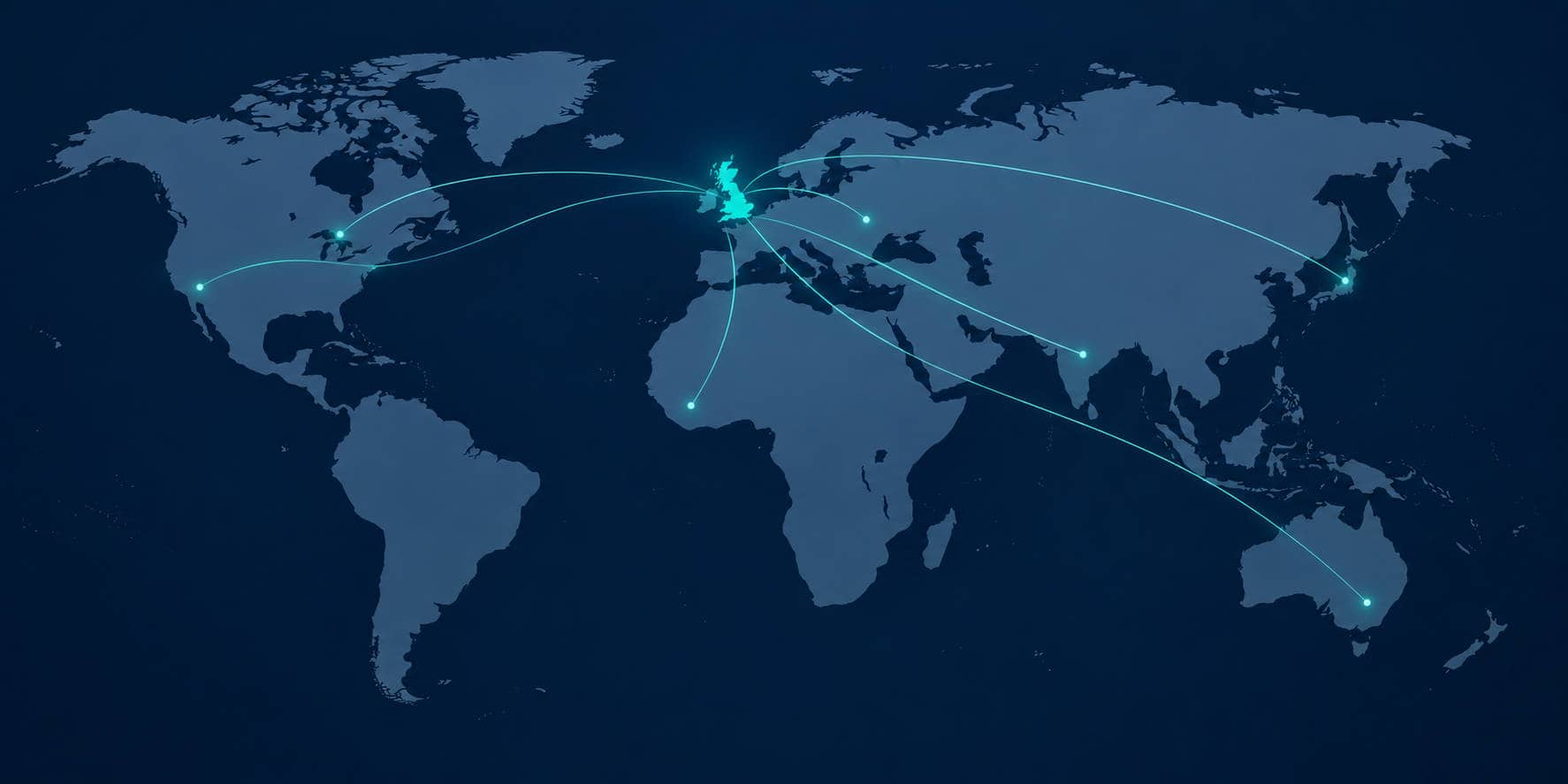
OnlyFans is operated by Fenix International Limited — a company registered in England and Wales.
That matters. UK rules land on UK companies. And when a platform has to follow a rule for one country, it very often applies that rule to everybody, because running different rules for different countries is expensive and easy to get wrong.
Here's where the main platforms are based:
| Platform | Based in |
|---|---|
| OnlyFans (Fenix International Ltd) | UK |
| AdmireMe | UK |
| Fansly (Select Media LLC) | USA |
| Clips4Sale (GROOBER LLC) | USA |
| ManyVids | Canada |
| Pornhub / Aylo | Luxembourg and elsewhere |
Platforms restructure, so check your own creator agreement for the company you're actually contracted with.
If you're in the UK
This applies to you directly. It's criminal law where you live. Work through the checklist below and treat 6 November as a hard deadline.
If you're outside the UK
The realistic risk isn't prosecution — it's losing your content and possibly your account.
UK criminal law generally reaches you if you're in the UK, if you keep the files in the UK, or if you deliberately sell into the UK. Simply using a UK-based platform does not by itself make you guilty of a UK crime.
But that's not the end of it:
- The platform has to comply even if you don't. OnlyFans, as a UK company, has to deal with this. It can change its rules for everyone worldwide, remove content, or close accounts — none of which requires a court.
- Automated moderation is blunt. Systems can't reliably tell a legal adult roleplay scene from a banned one, so expect over-removal on terms like "choke", "step", "teen" and "schoolgirl" regardless of what your scene actually shows.
- Blocking UK customers isn't a complete answer. It may reduce your exposure, but the platform still holds and reviews your content, and it doesn't settle every legal question.
Our honest advice if you're outside the UK: don't ignore this, and don't panic either. Assume your platform will apply the strictest rule everywhere. Audit your catalogue on the same timeline as UK creators. If a particular piece of content is commercially important to you, get advice from a lawyer in your own country before deciding to keep it.
Your back catalogue is the real problem
Removing a video from one platform is not the same as no longer having it.
Because simply having the files counts, you need to clear it from everywhere you control:
- Every platform account, including archived, hidden and expired posts
- Clip stores, bundles and subscriber-only archives
- DM attachments and auto-message libraries
- Scheduled posts and drip campaigns
- Your own website, mailing list, cloud storage and computer
- Backups — including that external drive in a drawer
- Trailers, previews, thumbnails, file names and tags

Content you've already sold is harder. You can't take back a file a customer downloaded in 2023. What you can control is whether you're still holding it and still offering it. Do both.
What to do before 6 November
1. Go through everything, and write it down. Account by account, drive by drive. Note what each item shows, where it is, and what you did about it. A written record is worth far more than a vague memory of having had a look.
2. Sort into three piles: clearly fine, clearly banned, not sure.
3. Deal with the clearly banned pile properly. Take it off sale, delete it everywhere, empty the bins, check the backups.
4. Take the "not sure" pile off sale while you decide. Don't leave it earning while you think about it — every day it's available counts, and the deadline isn't moving.
5. Retitling won't solve it. Worth saying because it is an easy assumption to make: renaming a choking video doesn't change what the footage shows, and the footage is what the law looks at. Tags still matter for staying on the right side of platform moderation — they just won't help you legally.
6. Keep your 18+ checks exactly as strict as they already are. None of that changes — every performer 18 or over, verified, documented, no exceptions. Keep records of identity and age, how and when you checked, signed releases, and where the content went. Store it securely and keep only what you need, because this is personal data.
If anything, tighten it up. A clear record that your 25-year-old performer is 25 is exactly what you want on file if a scene's styling ever gets questioned.
7. Get proper legal advice on anything you're unsure about — especially if family roleplay or breath play is a big part of your income. The distinctions above are fine, and a lawyer is a lot cheaper than the alternative.
What nobody can tell you yet
Some honesty, because a lot of the coverage has sounded more certain than the facts support:
- The exact paperwork bringing these rules into force hasn't been confirmed for all three. Government guidance says 6 November 2026 for England and Wales. Work to that date, but don't be shocked if some details differ.
- Scotland and Northern Ireland may not be identical. The law treats them separately.
- Exactly who outside the UK is covered is genuinely unsettled. Don't assume living abroad protects you completely. Don't assume it condemns you either.
- No platform has published a definitive banned-words list for this law. That isn't permission — it means they haven't told you yet. Expect rules to arrive with little notice.
The short version
Three things are banned: realistic choking or suffocation; sex between relatives, including adults pretending to be blood relatives; and any character played as under 16.
One deadline: 6 November 2026.
The unusual bit: simply still having the files counts, so your old content is the problem, not just future shoots.
If you're outside the UK: the law may not reach you, but your platform almost certainly will — especially on OnlyFans, which is a UK company.
If your content doesn't touch those three areas, this changes very little for you. If it does, you have a few weeks and a clear job. Start this week — not because it's complicated, but because going through every drive, archive and scheduled post always takes longer than you think.
And if this takes out part of a catalogue you built carefully, legally and with everyone's full consent, that is a real commercial loss and it is reasonable to feel it. It doesn't mean you did anything wrong. Deal with the deadline first.
Sources
- Crime and Policing Act 2026: offences relating to pornography — GOV.UK guidance
- Crime and Policing Act 2026 pornography factsheet — GOV.UK
- Crime and Policing Act 2026, section 106 (sex between relatives)
- Crime and Policing Act 2026, section 107 (characters under 16)
- Crime and Policing Act 2026, full contents
- Home Office Circular 004/2026
- Online Safety Act 2023, section 3 (which services are covered)
- Ofcom: highly effective age assurance
This article is general information, not legal advice. This law turns on fine distinctions and some details aren't settled yet. If your content might be affected, speak to a lawyer who knows this area — and if you're outside the UK, one in your own country too.

